How to best care for your new pup
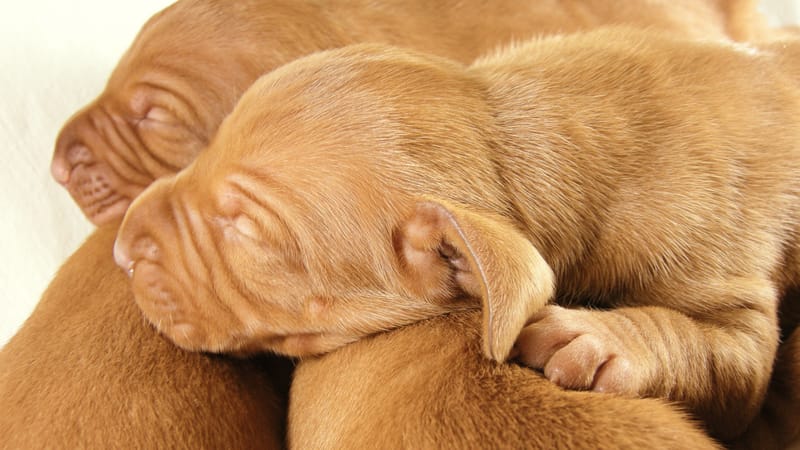
TRAINING YOUR PUP BEGINS on DAY ONE • We're happy to advise on how best to school your pup, and can also recommend some excellent reading. On handover, you’ll will also be given a puppy rearing booklet to help you through the early months.
PUPPY DIET • Your puppy has been reared and will thrive on a raw meaty bone diet. Normally chicken wings and carcass portions.
NEVER FEED YOUR DOG COOKED BONES because they harden to become sharp and brittle.
EXERCISE – THE FIRST 3 MONTHS • Other than playing, do ensure that your new pup avoids over-strenuous activity for the first 3 months. Running, playing and jumping is normal, and it will tire them naturally. Limit dog walking/training on lead to a maximum of 5 minutes once or twice a day per month of life for the first 3 months. Continue this until 12 months of age – the rule of thumb is 5 minutes of lead walking per month of life. The main reason is that on lead they are not in control of their resting where undue, enforced and imbalanced exertion can damage immature joints and bones that are not as yet fully joined or formed. To over-stress new bone and joint tissue growth, particularly in the legs and hip joints can cause serious developmental issues and long-term conditions such as hip dysplasia. As a general puppy rule, allow them to wear themselves out, and rest when needed.
WHOOPSIES • Once the mother is done with cleaning up after her pups, we takeover. It is our practice to 'habit' all pups in the new litter to poo outside. To reinforce this instilled conditioning, we recommend from day one of ownership that you continue this practice first thing every morning ( also throughout the day ) to oust your pup from the nearest door to do their number one's and two's outside. While accidents can happen – this repetition will soon pay off, especially if rewarded by your over-enthusiastic approval.
VIZSLA'S ARE KIND OF SENSITIVE • Vizsla's generally fair poorly with stressful containment such as dog kennels. They benefit greatly however, particularly during the training years, from having a calming dog-crate. This is simply a place – a rug-covered wire-box cage – where your pup can take rest or refuge on their own accord; or a place you can also implement for isolation from stimulation when they are unruly, over-energised or profoundly disobedient.
SOCIALISATION • We encourage you to socialise your new pup 'responsibly' with all ages of other dogs within a supervised free-range environment. This essential fun-filled educational assimilation provides your pup with a psychologically rewarding and physically exhausting playtime event.